Shopping for a home in Bee Cave or along Lake Travis and noticing prices that seem to outgrow standard mortgages? You are not alone. Many homes in this area fall into price ranges where jumbo financing becomes the practical path. In this guide, you will learn what a jumbo loan is, how it is underwritten, what affects pricing, and how to structure a strong offer when jumbo financing is part of the plan. Let’s dive in.
What is a jumbo loan?
A jumbo loan is a mortgage that is larger than the annual conforming loan limit set by the Federal Housing Finance Agency. Conforming loans fit within limits that allow purchase by Fannie Mae or Freddie Mac. Loans above that limit are considered non-conforming, or jumbo.
Conforming limits change each year. Before you shop, confirm the current limit for Travis County so you know whether your price point will likely require jumbo financing.
Why jumbos are common in Bee Cave
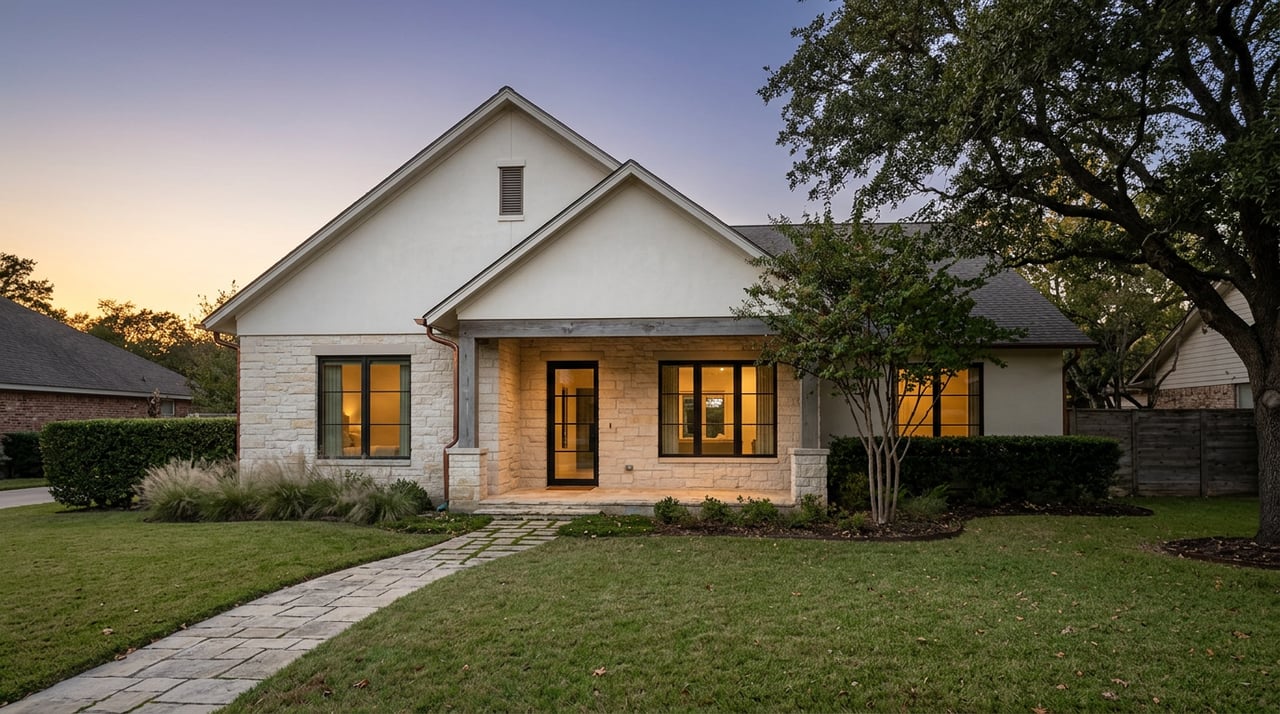
Bee Cave and nearby Lake Travis neighborhoods include lakefront homes, hill country acreage, custom builds, and high-end finishes. These features often push prices above typical metro medians. As a result, a meaningful share of purchases in this submarket require either jumbo loans or large down payments to stay below the conforming threshold.
Properties with unique features can affect financing. Large parcels, waterfront lots with docks, or custom construction may need specialized appraisals and extra inspections. This can add cost and time to the loan process, so building a smart timeline from the start is important.
Typical jumbo requirements
Jumbo underwriting is more detailed than a standard conforming loan. Expect tighter credit standards, larger down payments, and more documentation.
Credit score
- Many lenders want higher scores than conforming loans.
- Minimums often range from the high 600s to mid 700s, with best pricing usually at 720 to 760 and above.
Down payment and LTV
- Typical down payments are 10 to 20 percent for moderate jumbos.
- Many lenders prefer 20 percent or more, depending on your profile and the property.
- For larger loans, second homes, investment properties, or unique waterfront homes, loan-to-value limits often tighten to 70 to 80 percent or lower.
Debt-to-income (DTI)
- Acceptable ratios vary by lender and profile.
- Well-qualified borrowers can see approvals into the mid 40 percent range, sometimes near 50 percent with strong compensating factors such as high reserves.
Cash reserves
- Jumbo loans usually require more reserves than conforming loans.
- Plan for 6 to 12 months of principal, interest, taxes, and insurance. Very large loans, investment properties, or self-employed borrowers may need more.
Income documentation
- W-2 employees: Often 2 years of W-2s and tax returns, recent pay stubs, and employer verification.
- Self-employed: Commonly 2 years of personal and business returns, K-1s or 1099s if applicable, profit-and-loss statements, and 12 to 24 months of business bank statements.
Asset documentation
- Bank and investment statements will be reviewed.
- Lenders verify the sources of down payment funds and any large deposits. Gift funds are often allowed with proper documentation and gift letters.
Property considerations
- Custom homes, large acreage, or waterfront properties may require specialized appraisal methods.
- Extra inspections can be common, such as septic or well checks, or dock and shoreline condition reviews.
Non-traditional programs
- Certain lenders offer asset-based or no-tax-return jumbo options for high-net-worth borrowers.
- These programs are bespoke, often requiring substantial liquid or retirement assets.
How jumbo rates and costs compare
Jumbo rates are priced separately from conforming loans. The spread between the two changes with market conditions and investor demand.
- In recent years, top-tier jumbo borrowers have sometimes seen rates equal to or even lower than conforming loans.
- Pricing depends on many factors: your credit, loan size, down payment, property type, and loan features such as fixed vs adjustable or interest-only.
Closing costs and fees can be similar to conforming loans. For complex properties, you may see higher appraisal fees or additional third-party checks. Ask about rate locks, float-down options, and lock extension fees, since large loans may have tighter rules.
Lender types to compare
- National banks and mortgage banks
- Credit unions
- Portfolio lenders that keep loans on their books
- Mortgage brokers with access to multiple jumbo programs
Portfolio lenders can offer flexible solutions, including interest-only options, but availability and pricing vary. It pays to compare quotes and lock terms from several lender types, including local lenders who know Bee Cave and Lake Travis property nuances.
How to compete with jumbo financing
In luxury and lakefront segments, sellers expect clear proof that financing will close smoothly. Structure your plan to reduce uncertainty for the seller while protecting your interests.
Get a full preapproval
- A full written preapproval is stronger than a soft prequalification.
- Preapproval typically includes income and asset verification and a conditional credit decision.
- This demonstrates you are ready and reduces seller concerns.
Plan for a longer timeline
- Jumbo underwriting can be more manual and documentation-heavy.
- Specialized appraisals for custom or waterfront homes can add time.
- Build in an extra 1 to 2 weeks compared with a standard conforming deal.
Prepare for appraisal variance
- Unique homes may have limited comparable sales.
- Budget for higher appraisal fees and the possibility of a value below contract price.
- If there is a shortfall, you may need to negotiate price, increase your down payment, or use bridge funds.
Strengthen your offer terms
- Consider a larger earnest money deposit to signal certainty.
- Keep inspection and financing timelines tight, but realistic for your lender and property type.
- Escalation clauses can help, as long as they are clear and capped at a number you approve.
- Be cautious about waiving financing contingencies; shorter, well-structured contingencies often balance risk better.
Use bridge, piggyback, or cross-collateral options when needed
- If you must buy before you sell, short-term tools like bridge loans or HELOCs may help.
- Combination financing can keep your jumbo loan amount lower, though rates and fees may be higher on short-term pieces.
Factor in HOA, floodplain, and lakefront permitting
- Many Bee Cave and Lake Travis properties sit in HOA communities that require separate approvals.
- Some areas intersect with regulated floodplains that may need special flood insurance.
- Lakefront homes often include docks and shoreline improvements that require permits. These can affect valuation, insurability, and timing.
Pre-purchase checklist for Bee Cave jumbo buyers
Get organized before you start touring homes so your preapproval and offer move fast.
- Recent credit report and FICO scores, or lender-provided decision
- Two years of tax returns (personal and business if self-employed)
- Recent pay stubs and W-2s, if employed
- Bank and investment account statements for the last 2 to 3 months
- Documentation for any large deposits and the source of funds
- A list of existing debts and monthly payments
- Proof of reserves equal to 6 to 12 months of PITI
- Signed gift letters, if using gift funds
- Shortlist of experienced local lenders who regularly finance Bee Cave and Lake Travis homes
Avoid common pitfalls
Small missteps can delay or derail a jumbo approval. Stay ahead of these issues.
- Incomplete documentation for self-employed or non-W-2 income
- Large unexplained deposits
- Low reserves relative to loan size
- Appraisal challenges: limited comps, permit issues, or property condition concerns
- Title complications such as easements, back taxes, or unresolved survey matters
Next steps
If you expect to use a jumbo loan in Bee Cave, start with a full preapproval and a realistic timeline. Compare several lenders, including portfolio options, and make sure your loan terms, contingency dates, and appraisal expectations align with the property type. With strong preparation, jumbo financing can be smooth and competitive.
You deserve guidance that combines market expertise with careful contract and title oversight. For tailored strategies on your Bee Cave or Lake Travis purchase, connect with Eileen Depew to plan your financing timeline, strengthen your offer, and move forward with confidence.
FAQs
What is a jumbo loan for Bee Cave home purchases?
- A jumbo loan is any mortgage above the FHFA’s annual conforming loan limit for the county; amounts over that limit are non-conforming.
How do jumbo loan rates compare to conforming in Texas?
- Rates vary with market conditions and your profile; top-tier borrowers sometimes see jumbo rates equal to or lower than conforming.
How much down payment is typical for a Bee Cave jumbo?
- Many lenders expect 20 percent or more, and unique or high-risk properties can require lower loan-to-value ratios.
How long does a jumbo loan closing usually take in Bee Cave?
- Plan for about 30 to 60 days, depending on documentation, appraisal complexity, and lender capacity.
Do jumbo loans require more documentation than standard loans?
- Yes. Expect deeper income, asset, and reserve verification, plus careful review of any large deposits.
Can I use gift funds for a jumbo down payment near Lake Travis?
- Often yes, with proper documentation and gift letters; lenders verify the source and terms of gifted funds.
Are interest-only jumbo loans available for Lake Travis homes?
- Sometimes, typically through portfolio lenders; availability and pricing vary and may require stronger reserves.
Can I use FHA or VA for a jumbo-sized purchase in Bee Cave?
- FHA and VA have program limits; most jumbo amounts exceed them. VA can exceed conforming in some cases, but this is not typical for large jumbos.