Buying waterfront in Horseshoe Bay can feel like buying a lifestyle and a construction project at the same time. You may be picturing sunrise views, easy lake days, and a private dock, but the details behind those perks matter more than many buyers expect. If you are considering a waterfront home or lot on Lake LBJ, this guide will help you understand the rules, risks, and documents that deserve a closer look before you close. Let’s dive in.
Understand how Lake LBJ works
Lake LBJ drives the waterfront market in Horseshoe Bay. Texas Parks and Wildlife describes it as a 6,449-acre reservoir with a maximum depth of 90 feet, and it is known for a mostly constant-level profile. That stability is one reason so many buyers are drawn to the area.
Still, “constant level” does not mean “no surprises.” LCRA says Lake LBJ is a pass-through lake that usually stays within about a one-foot range, but it can rise above normal levels during floods. If you are shopping waterfront, it helps to think about both everyday enjoyment and what happens during heavier water events.
The shoreline itself also varies. Texas Parks and Wildlife notes that parts of Lake LBJ have rocky water near the dam, while the upper end tends to be sandier and more stained. In practice, that means two waterfront properties in Horseshoe Bay can offer very different boating, swimming, and dock conditions.
Know the rule layers before you buy
One of the biggest mistakes buyers make is assuming the waterfront lot line tells the whole story. In Horseshoe Bay, a property may be affected by deed restrictions, ACC standards, POA rules, and city code. The waterfront can look simple from the backyard, but the approval path often is not.
The Horseshoe Bay Property Owners’ Association says it is the largest of several POAs in the city. The City of Horseshoe Bay also explains that subdivision ACC information provided by the city is courtesy information and may be outdated. The city further notes that ACC rules govern exterior work during construction, while the POA handles compliance after occupancy.
That matters if you want to remodel, rebuild, add a boathouse, or change shoreline features. A home that seems move-in ready today may still come with future use limits that affect your plans.
Check dock and boathouse feasibility early
If a private dock or boathouse is part of your goal, verify feasibility before you get too far into a deal. On Lake LBJ, LCRA rules control what can be placed on the water. Those rules are separate from city permits and neighborhood approvals.
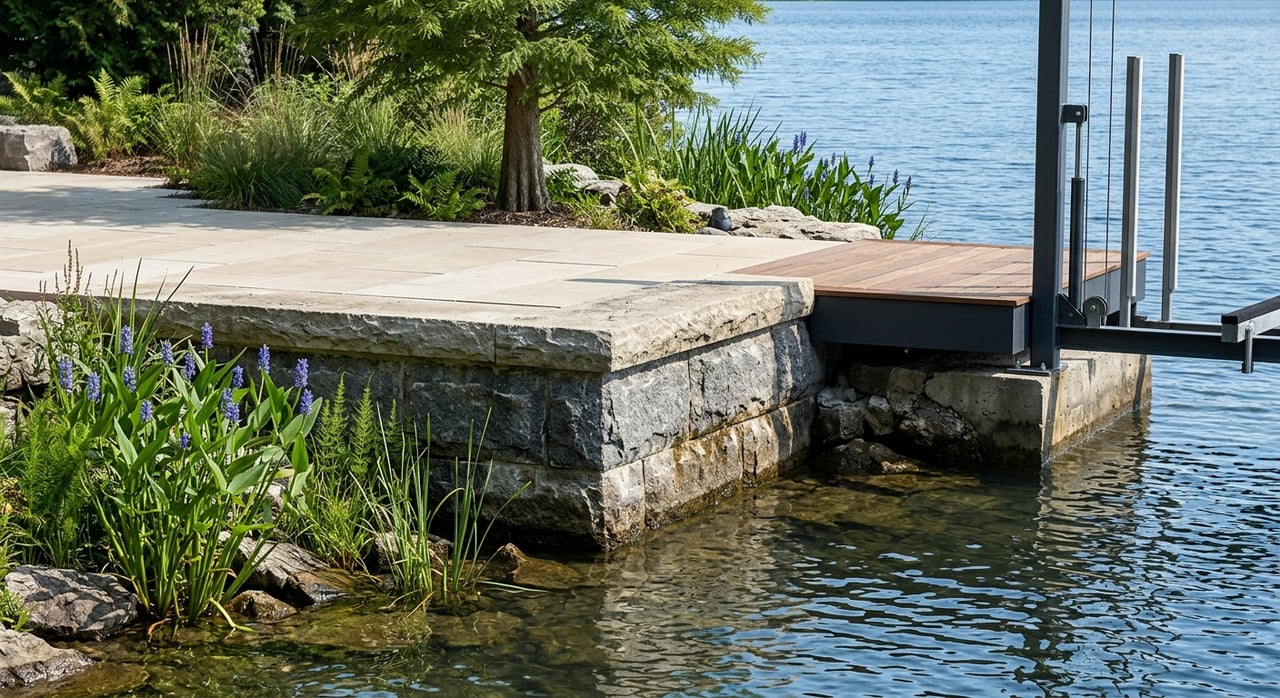
LCRA says residential docks may extend no more than 50 feet from the shoreline. In narrow coves, docks also must leave at least 40 feet of lake access. LCRA further states that an owner must own or have permission to use the submerged land under the dock.
That last point is especially important. LCRA does not adjudicate private property-rights disputes, so a dock location near a boundary line can create title and survey questions. If the dock footprint, anchor lines, or shoreline improvements are close to neighboring property lines, you will want strong survey review before closing.
LCRA also states that residential docks of 1,500 square feet or less do not require a permit, registration, or fee. Larger floating docks are treated as marina facilities and must comply with the Highland Lakes Marina Ordinance. Even when an LCRA permit is not required, the structure still must meet LCRA standards.
Understand local approvals for improvements
In Horseshoe Bay, approval often happens in stages. The subdivision ACC may need to approve plans before work starts, and then the city may require permits as a separate step. Buyers sometimes discover this too late, after assuming a contractor can begin right after closing.
The Horseshoe Bay POA states that prior ACC approval is required before natural soil or vegetation is disturbed and before construction or improvements begin, including boathouses and boat slips. After that approval, city permits must be obtained separately.
The City of Horseshoe Bay requires permits for accessory structures such as boat houses. The city also warns that starting work before a permit can lead to stop-work orders, fines, and delays. If your purchase decision depends on improving the waterfront, this timeline matters.
The city also requires contractor registration, including proof of valid state licenses for mechanical, electrical, plumbing, and irrigation contractors. Waterfront work often involves several trades, so permit readiness can affect your project budget and schedule more than expected.
Do not overlook flood exposure
Lake LBJ’s steady water level gives many buyers peace of mind, but it should not create a false sense of security. The City of Horseshoe Bay’s flood-plain permit form states that flood maps are only a regulatory tool and do not guarantee a property will be free from flooding or flood damage. That is a key distinction for waterfront buyers.
The city’s building-permit materials require flood-zone disclosure, site plans showing flood-hazard areas and drainage features, and when applicable, pre- and post-elevation certificates. The permit packet also says an approved survey is required before plumbing rough on new residential work, accessory structures, and additions that increase building footprint.
LCRA adds another important point: Lake LBJ has no flood-storage capacity. It is a pass-through lake, which means upstream rainfall can push water levels above normal during flood events. In short, stable daily water levels do not remove flood risk.
Review insurance before closing
Flood risk is not just a planning issue. It is also an insurance issue that can affect your monthly costs and your ability to close on time. Texas Department of Insurance says a homeowners policy does not cover flood damage, so buyers need a separate flood policy.
TDI also says lenders require flood insurance in designated flood zones. Flood policies usually have a 30-day waiting period, and the average flood policy costs about $700 per year, though the actual premium varies based on flood risk, home value, and deductible. If you are financing a waterfront purchase, review these costs early instead of treating them as a last-minute add-on.
Budget for ownership beyond the mortgage
Waterfront ownership in Horseshoe Bay often includes recurring costs that are easy to underestimate. Besides taxes, insurance, and regular home maintenance, you may also have POA-related fees and shoreline upkeep. Those costs can shape what feels affordable over the long term.
The Horseshoe Bay Maintenance Fund says annual 2026 fees are $360.99 per property in Horseshoe Bay Proper, North, and South, and $866.52 in Horseshoe Bay West. The fund is separate from the POA and is used for roads and amenities. That means buyers should confirm not only the amount due, but also which entity collects which fee.
Storage rules may also affect your setup. A current Horseshoe Bay HOA handbook states that inoperative or abandoned boats may not be stored on or in front of a lot. It also says boats, trailers, mobile homes, or recreational vehicles may not be parked in visible front-yard locations for more than a short period or stored in rear yards if visible from the street, adjacent lots, or common areas.
Expect different maintenance than an inland home
Waterfront maintenance goes beyond mowing and exterior paint. Docks, bulkheads, flotation, anchoring, and electrical safety all deserve attention. LCRA’s dock standards require encased flotation, secure anchoring, lighting when a dock extends beyond the allowed distance or creates a navigation hazard, and no overhead electrical spans above open water.
LCRA says residential docks are not subject to annual inspection, but they still must comply with those standards. That makes it important to review existing improvements carefully, especially if they were added years ago. A waterfront structure can look functional and still need updates to meet current requirements.
The lake environment itself also affects maintenance habits. Texas Parks and Wildlife warns Lake LBJ boaters to clean, drain, and dry gear because zebra mussels have invaded the reservoir, and algae blooms can be an issue. If you plan to keep watercraft at the property, routine care is part of ownership.
Verify marina access if no private dock exists
Not every waterfront or water-oriented property includes a private dock. In some cases, the value depends more on marina access, shared facilities, or a separate slip arrangement. That access should never be assumed.
Horseshoe Bay Resort says transient guest slips and trailer storage are available to resort guests for $175 per night. It also notes that some rental boats and personal watercraft require the driver to be at least 21, have a valid driver’s license, and hold a boater education certificate if born after September 1, 1993.
The larger takeaway is simple: marina access can be separate from homeownership. If the property’s appeal depends on a slip, guest use, or marina privileges, confirm the exact arrangement, cost, and rules before closing.
Build a stronger waterfront due diligence list
A smart waterfront purchase starts with a deeper document review than many standard home purchases. In Horseshoe Bay, the right paperwork helps you confirm not just what you are buying, but also what you can do with it later. This is where clear contract and title review can protect you from expensive surprises.
Before closing, ask for:
- Current survey
- Recorded plat
- ACC approval history
- City permit history
- Floodplain or elevation documents
- POA fee status or resale packet
- Any dock, slip, or marina agreement
These items matter because the city permit process relies on surveys, plats, flood-zone information, and elevation certificates. They also matter because LCRA requires permission to use submerged land and does not settle private property-rights disputes.
What this means for your purchase strategy
The best waterfront buy is not always the property with the prettiest view on first showing. It is the one that fits your goals, your budget, and the rule structure that comes with the shoreline. If you are buying for boating, future improvements, or long-term value, the details behind the lot can matter just as much as the water itself.
In Horseshoe Bay, that means looking closely at flood exposure, dock feasibility, permit history, neighborhood restrictions, and ongoing costs before you commit. With the right due diligence, you can move forward with more clarity and fewer surprises.
If you want trusted guidance on buying waterfront in Horseshoe Bay, Eileen Depew brings local Hill Country market knowledge together with contract-focused attention to detail so you can make a confident decision.
FAQs
What should you check before buying waterfront in Horseshoe Bay?
- Review the survey, plat, flood-zone information, ACC approval history, city permit history, POA documents, and any dock or slip agreements before closing.
Can you build a private dock on Lake LBJ in Horseshoe Bay?
- Maybe, but you need to confirm LCRA dock rules, cove width, submerged land rights, ACC approval, and any required city permits before assuming a dock is allowed.
Does Lake LBJ being constant level mean no flood risk?
- No. LCRA says Lake LBJ is a pass-through lake with no flood-storage capacity, so it can rise above normal levels during floods.
Do you need flood insurance for a waterfront home in Horseshoe Bay?
- Texas Department of Insurance says homeowners policies do not cover flood damage, and lenders require flood insurance in designated flood zones.
Are waterfront improvements in Horseshoe Bay subject to city permits?
- Yes. The City of Horseshoe Bay requires permits for accessory structures such as boat houses, and starting work without permits can lead to delays and fines.
Does owning a home in Horseshoe Bay automatically include marina access?
- No. Marina access, guest slips, and related use rules can be separate from homeownership, so those details should be verified before closing.