Dreaming of a weekend place on Lake LBJ where you can unplug, boat, and host family getaways? Buying a second home in Horseshoe Bay can deliver that lifestyle, but it also comes with rules, fees, permits, and insurance details that are easy to miss. You want a simple path to a smart purchase that fits your goals, whether that is pure relaxation, occasional renting, or long-term investment. This guide breaks down what to check before you write an offer, how to plan for financing and taxes, and what to know about POAs, resort access, and short-term rentals. Let’s dive in.
Why Horseshoe Bay works for second homes
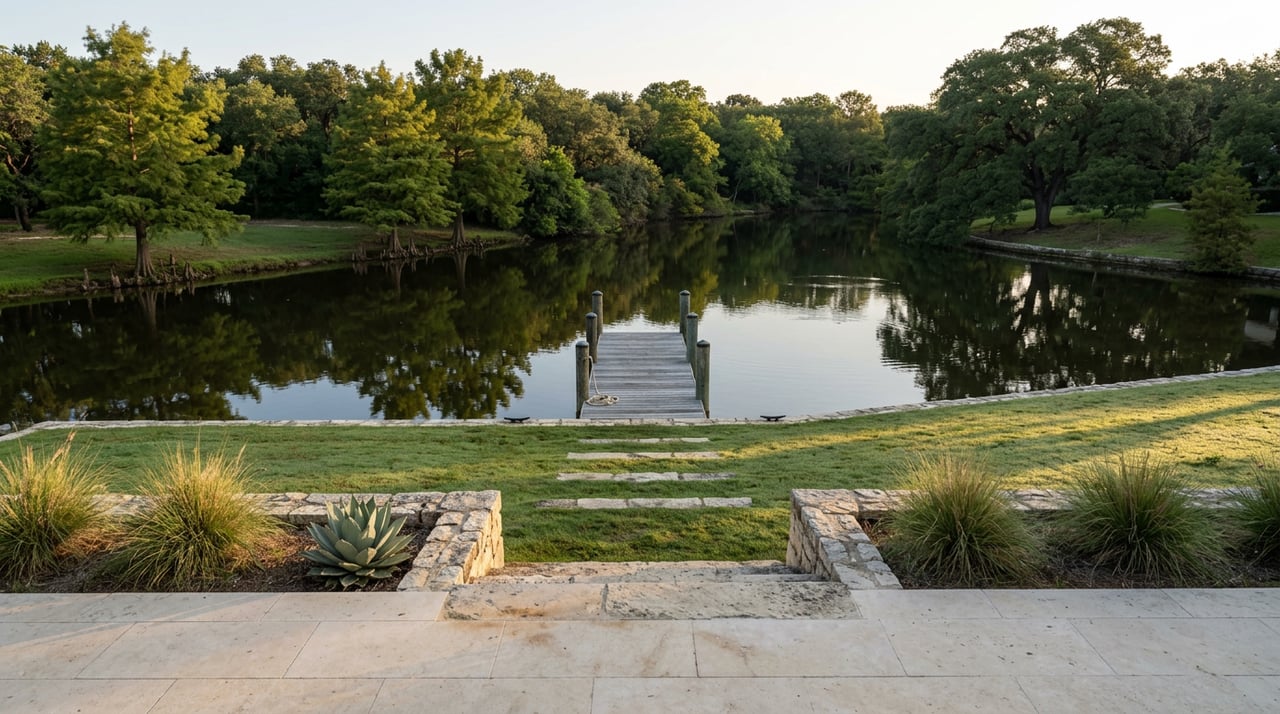
Horseshoe Bay sits on Lake LBJ and centers around a destination resort, golf, and marina amenities. You will see a range of options: lakefront cottages and homes, condos near the resort, and single-family lots inside planned communities. Some neighborhoods have city water and sewer, while others use private septic or grinder systems. Property type and exact subdivision impact what you can build, how you use the water, what you can dock, and how you insure it, so make those your first filters.
Property types and rules to confirm
- Waterfront homes and lots: Dock rights, shoreline work, and marina access can differ by subdivision and managing entity. Always verify slip assignment rules, transferability, waitlists, and guest policies with the relevant operator. Review any architectural controls that affect remodels or new docks.
- Condos near the resort: Expect association rules on rentals, pets, parking, and use of common areas. Ask for the full condo documents early.
- Resort-adjacent homes: Some developments sit near amenities run by the private Club at Horseshoe Bay Resort. Club access is a separate membership with its own fees and policies.
For resort and marina context, review the Club at Horseshoe Bay Resort’s membership information and amenities overview on the resort’s site.
Understand POAs, HOAs, and resort memberships
Many Horseshoe Bay properties fall under the Horseshoe Bay Property Owners’ Association or a smaller neighborhood HOA. The HSB POA manages common areas, including parks and lake access for members. Use the HSB POA area map to confirm where a property sits and which association applies. Some subdivisions have unique rules, so treat each parcel as its own rulebook.
Resort access is separate. The Club at Horseshoe Bay Resort is a private club with its own membership categories, initiation fees, dues, and guest policies. A home can be inside the city or a POA and still require or offer separate club membership, depending on the development. Do not assume a listing includes club privileges. Confirm whether membership is optional or required, and whether any membership can transfer with the sale.
Key documents to request during option period
- Resale certificate and CC&Rs: Texas law gives you the right to a property owners’ association resale certificate that discloses rules, fees, and obligations that run with title. Ask for the long-form CC&Rs, bylaws, budget, reserve details, and meeting minutes.
- Budgets, reserves, and assessments: Review current financials and any pending special assessments. Resort-area associations sometimes fund infrastructure or landscaping with special assessments.
- Club membership terms: If membership matters, get the initiation, transfer, and dues schedule in writing. Confirm what conveys at closing and who pays any fees.
Helpful references: the HSB POA area map, the Texas POA resale certificate statute, and the Club at Horseshoe Bay Resort site.
Short-term rentals on Lake LBJ: rules you cannot skip
If you plan to rent for less than 30 days, start with the city permit. Horseshoe Bay requires an annual Short-Term Rental Permit, a local contact who can respond quickly, compliance with safety devices, and payment of an annual registration fee. The city lists a $600 annual registration fee. Operators who advertise stays under 30 days must register, meet the standards, and be available for inspections.
Texas also imposes a 6 percent state Hotel Occupancy Tax on stays of 29 days or less. Booking platforms may collect some taxes, but you are responsible for full compliance and recordkeeping. Check what your platform remits and what you must file with the Texas Comptroller.
Important: City permits do not override private deed restrictions. If your HOA bans short-term rentals or imposes limits, those rules still control.
Insurance matters if you host guests. Standard homeowners policies often exclude business activity and do not cover guest-caused losses. If you plan to rent, obtain a policy that explicitly covers short-term rental activity, guest liability, and loss of income.
Key resources: the City of Horseshoe Bay STR program page and the Texas Comptroller’s HOT guidance.
Financing your second home
Lenders underwrite second homes differently than primary residences. Under agency rules, occupancy classification drives pricing, down payment, and reserve requirements. Second home loans often require higher down payments and more reserves than primary homes, and investment properties are stricter still. Review Fannie Mae guidance on occupancy types with your lender early.
Typical market practice: many lenders look for about 10 percent down on a one-unit second home, while loans treated as investments often require 15 to 25 percent down plus higher reserves. Individual lenders may add stricter overlays in resort markets or for jumbo loans. Start your pre-approval with the intended use clearly stated so quotes reflect second home or investment pricing from the start.
Government loans are not a fit for true vacation homes. FHA financing requires primary occupancy and generally is not appropriate for a second home. VA loans also focus on primary residences; using VA benefits for a vacation home is not the normal permitted use.
Taxes and ownership costs in Texas
Texas homestead exemptions apply only to your principal residence. A second home in Horseshoe Bay will not qualify for the homestead limits that reduce local property taxes. Confirm the taxing units for your lot, whether it lies in Llano County or Burnet County, and estimate your annual tax bill without homestead.
If you plan to rent, factor in state Hotel Occupancy Tax and any local registration or inspection costs. For federal taxes, the IRS applies personal use versus rental tests that control how you deduct expenses and claim depreciation. Work with a tax advisor and request any historical rental data before you rely on projected income.
Insurance and flood risk near the water
Waterfront living requires careful insurance planning. Standard homeowners policies exclude flood damage, and many carriers will limit or cancel coverage if you operate frequent short-term rentals without proper endorsements. If you will host guests, secure a purpose-built STR policy or a landlord policy that includes guest liability and loss-of-income coverage.
If a property is in a FEMA Special Flood Hazard Area, lenders will require flood insurance that meets NFIP or approved private standards. Premiums depend on risk factors such as elevation and mitigation. Run the property address through FEMA’s resources and obtain quotes before your option period ends. Interagency flood guidance explains how lenders evaluate and accept flood coverage, including private policies.
Utilities, access, and shoreline rights
Horseshoe Bay properties can have different utility setups. Confirm water source, sewer or septic type, and grinder-pump maintenance responsibilities. Ask about any utility assessments and verify internet options if you plan to manage bookings remotely.
For lake access, verify how docks, lifts, and slips are assigned and whether transfers are allowed. Some privileges are controlled by the resort, a POA, or a marina association. Get the rules and any waitlist details in writing before you assume lake access.
A Horseshoe Bay due diligence checklist
Use this pre-offer and pre-closing list to stay organized:
- Identify county and taxing units. Confirm whether the lot is in Llano or Burnet County and estimate the tax bill without homestead.
- Order the HOA/POA resale package. Review the resale certificate, CC&Rs, bylaws, budget, reserves, assessment history, meeting minutes, and any litigation disclosures.
- Confirm resort and club terms. Verify whether club membership is required or optional, what conveys, initiation or transfer fees, dues, and guest rules.
- Map out STR compliance. If renting under 30 days, plan for the city STR permit, annual fee, required safety devices, a local contact, and state HOT registration.
- Check insurance early. Quote homeowners, STR-specific coverage, and flood insurance. Verify vacancy and business-use clauses.
- Verify utilities. Confirm water, sewer or septic, grinder-pump duties, and internet availability. Note any utility assessments.
- Protect the shoreline. Obtain a recent survey. Verify easements, dock or boathouse rights, and permits required for any shoreline work.
- Lock in financing. Get pre-approval that matches your intended use. Ask about LTV limits, reserves, rate adjustments, and any resort-market overlays.
- Underwrite rental performance. If income matters, request historical bookings, occupancy rates, and management costs. Confirm HOA occupancy, parking, and noise rules.
- Write protective contingencies. Include HOA review, club membership approval if needed, flood and insurance approvals, lender commitment, and updated survey and title review.
How a legal-savvy agent helps you win
Second homes in resort markets come with multiple layers of rules. A detail-focused advocate can help you gather and interpret HOA and club documents, confirm STR compliance, and structure a contract that protects your option period and closing. With attorney-level contract oversight and local market knowledge, you can focus on the lifestyle while reducing surprises.
If you are considering a Horseshoe Bay purchase, let’s build your plan. Connect with Eileen Depew for clear, contract-smart guidance from search to close. Get peace of mind when you sign. Schedule a consultation.
FAQs
What makes a second home different from an investment property for lenders?
- Lenders classify occupancy types differently, and second homes usually require higher down payments and reserves than primary homes, while investment properties are stricter; review Fannie Mae’s occupancy guidance with your lender.
Are short-term rentals allowed in Horseshoe Bay, Texas?
- The city requires an annual STR permit, a $600 registration fee, a local emergency contact, and safety compliance; HOA rules still apply and can prohibit or limit rentals even if you have a city permit.
Do second homes in Horseshoe Bay qualify for the Texas homestead exemption?
- No, the Texas homestead exemption applies only to your primary residence, so plan your Horseshoe Bay tax budget without homestead savings.
Is flood insurance required for Lake LBJ waterfront homes?
- If the home lies in a FEMA Special Flood Hazard Area, your lender will require flood insurance that meets NFIP or approved private standards; get quotes during your option period.
Does a Horseshoe Bay Resort club membership transfer when I buy?
- It depends on the property and membership category; confirm whether membership is required or optional, what conveys, and who pays any initiation or transfer fees directly with the club before you close.
What insurance do I need if I plan to short-term rent?
- Standard homeowners policies often exclude business activity, so obtain a policy that explicitly covers short-term rental use, guest liability, contents, and loss of income.